
Powder Filling Machine Types Explained: Semi-Automatic, Single-Head, Double-Head, and Three-Head Models
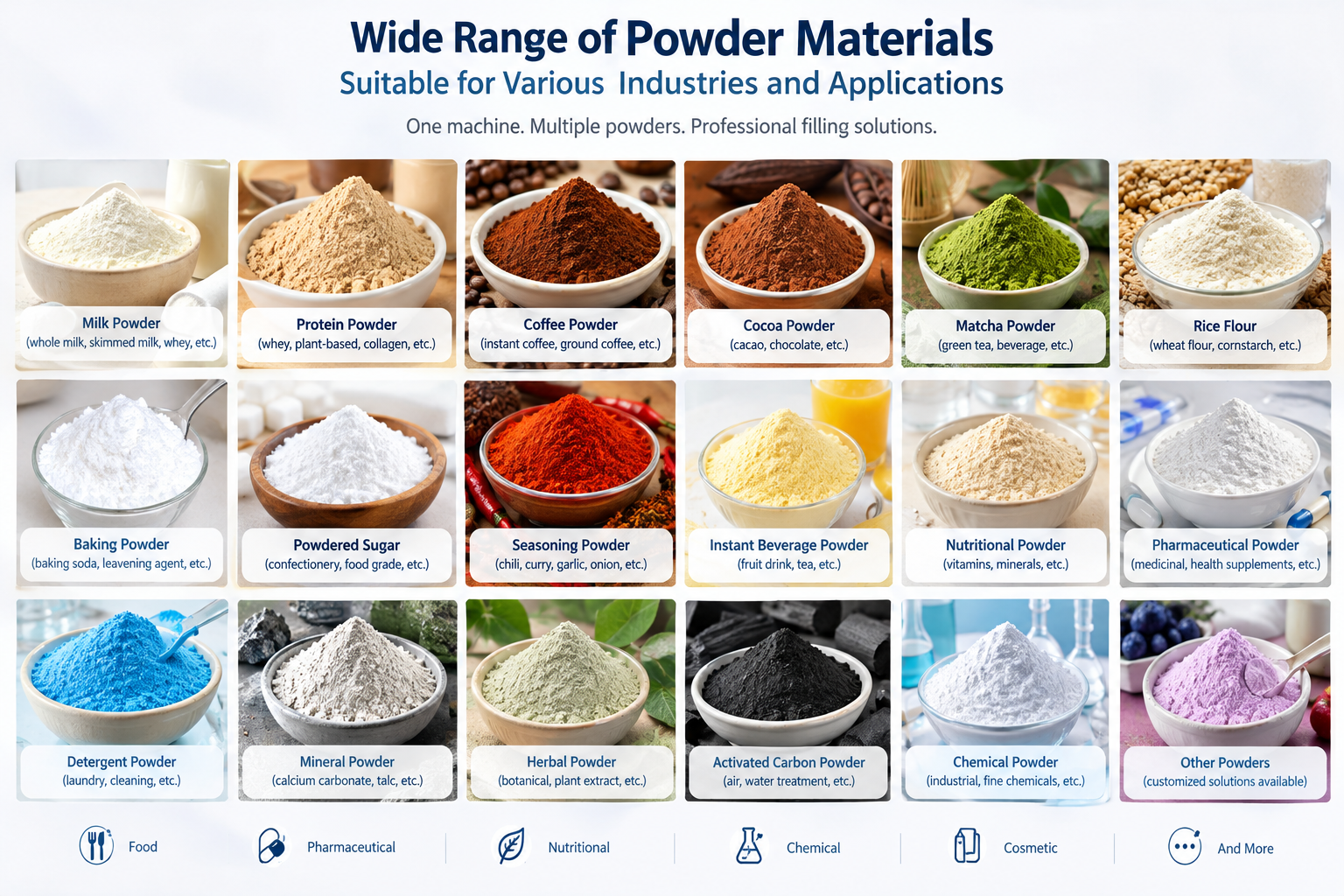
Choosing the right powder filling machine is an important decision for manufacturers in the food, pharmaceutical, nutritional, and chemical industries. The right equipment needs to handle the material consistently, meet the required filling weight, achieve the expected production output, and fit into the existing packaging process.
However, not every powder filling application requires the same machine. A small business filling specialty coffee powder may need a different solution from a manufacturer producing thousands of milk powder cans per hour.
Powder filling machines are available in several configurations, including semi-automatic, automatic single-head, double-head, weighing-type double-head, and three-head models. Understanding their differences can help you select equipment that matches your current production needs while allowing room for future growth.
1. What Should You Consider Before Buying a Powder Filling Machine?
Before comparing machine models, it is helpful to identify the key requirements of your product and production process.
Filling weight: Are you filling 10 g sachet-compatible containers, 100 g jars, 500 g cans, or larger packages? The target weight influences the auger configuration and dosing method.
Production capacity: How many containers do you need to fill per minute? A semi-automatic machine may be sufficient for small batches, while a multi-head automatic machine may be more suitable for larger production volumes.
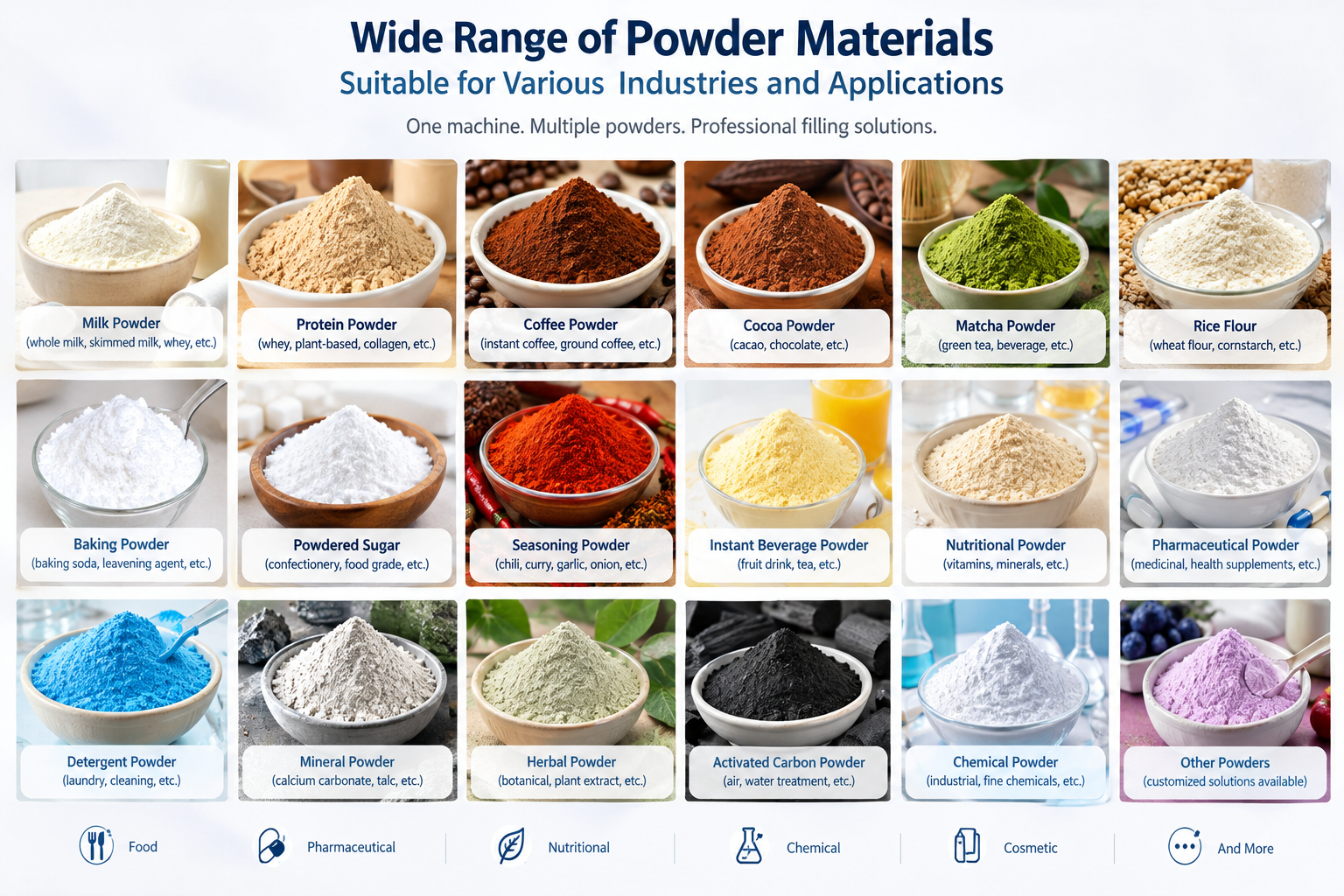
Powder characteristics: Milk powder, protein powder, coffee powder, cocoa powder, and fine chemical powders can behave differently during feeding and filling. Bulk density, flowability, dust generation, and moisture sensitivity all affect machine selection.
Filling accuracy: Standard auger dosing is suitable for many applications. If actual net weight is a particularly important quality requirement, a weighing-type powder filling machine may be worth considering.
Container and packaging line: Container diameter, height, opening size, and closing method influence machine configuration. The filling machine may also need to connect with a container unscrambler, capping machine, can sealer, or labeling machine.
Defining these requirements first makes it easier to compare machines based on actual production needs rather than price or filling-head count alone.
2. Five Types of Powder Filling Machines
Semi-Automatic Powder Filling Machine
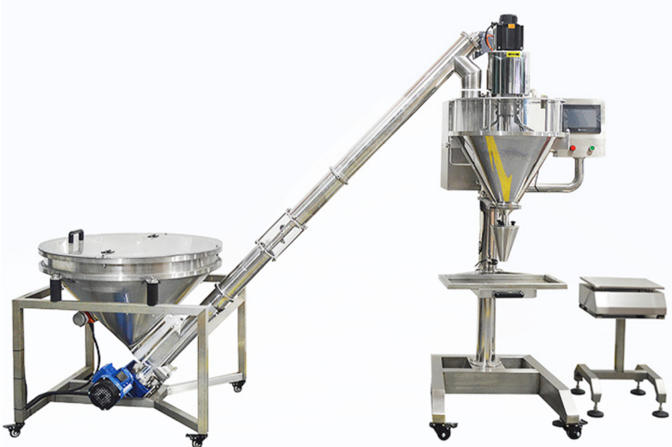
A semi-automatic powder filling machine is designed for small and medium-sized production batches. The operator typically positions the container beneath the filling nozzle and initiates the dosing cycle.
This configuration offers flexible operation and is useful when production volumes are limited or products change frequently. It can handle compatible materials such as coffee powder, milk powder, protein powder, and powdered seasonings. Filling accuracy depends largely on operator consistency, so it is better suited to product development or very small batches than to tight net-weight production.
Best suited for: Small-batch production, startups, product development, and businesses that do not require fully automatic container handling.
Automatic Single-Head Powder Filling Machine
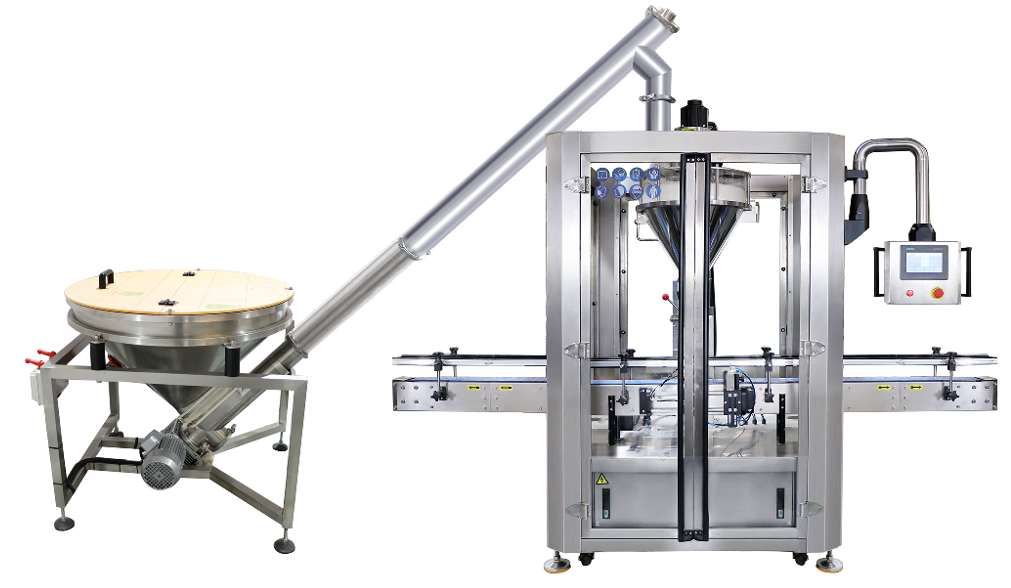
A single-head powder filling machine automates the filling process and can be integrated with a compatible container feeding system.
Depending on the configuration, it can include servo-controlled auger dosing, PLC touchscreen control, recipe storage, and a no-container-no-fill function. Dosing remains volumetric: the auger delivers a volume based on preset rotation parameters, so accuracy depends on the stability of the powder's bulk density.
Best suited for: Manufacturers moving from manual or semi-automatic filling to automated production, particularly when moderate output is sufficient.
Automatic Double-Head Powder Filling Machine
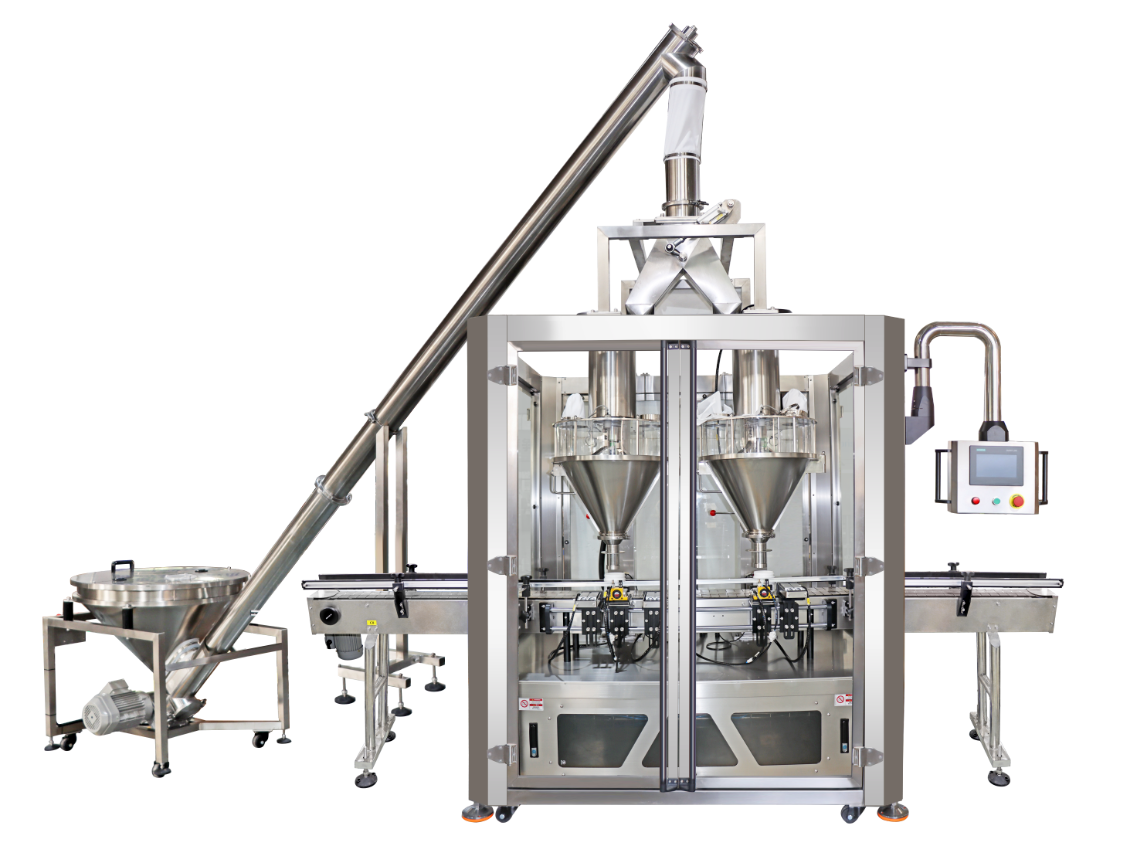
A double-head powder filling machine uses two filling heads to increase potential throughput. It is suitable for manufacturers who need higher output without moving directly to a larger multi-head system.
The actual production rate depends on the filling quantity, powder flow characteristics, container handling, and machine cycle. Like the single-head model, it uses volumetric auger dosing, so it offers higher output rather than higher accuracy.
Best suited for: Automated production of milk powder, coffee powder, protein powder, and other compatible powdered products.
Double-Head Powder Filling Machine with Weighing Function
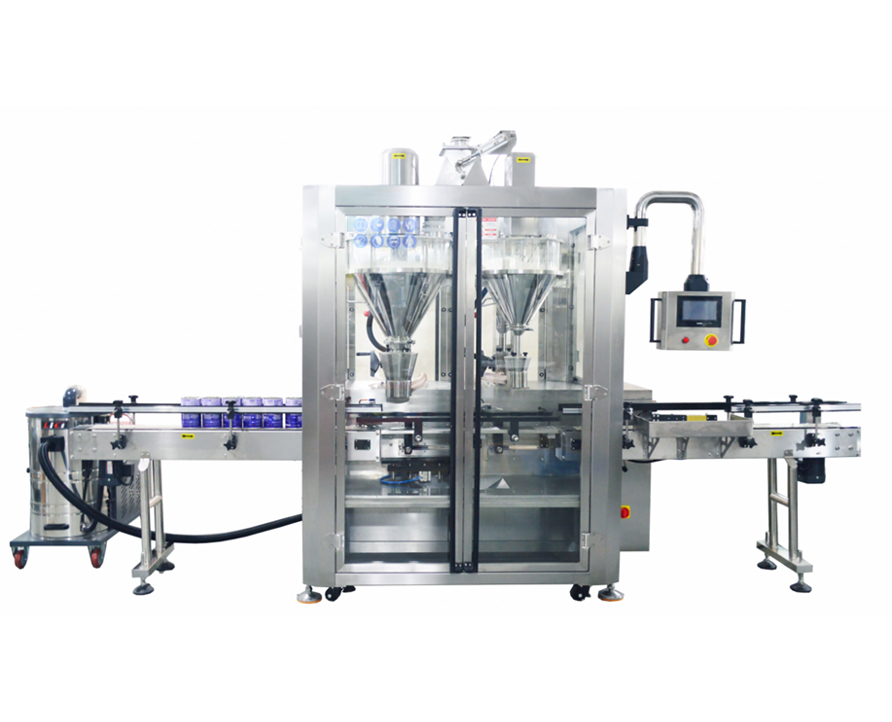
This configuration combines auger feeding with a weighing system. Instead of relying solely on preset screw rotation, the machine measures the dispensed weight and can adjust the filling process accordingly.
Some configurations use a main filling stage followed by supplementary filling to approach the target weight.
Best suited for: Applications where net-weight control is especially important, including nutritional powders and products sold according to a specified net weight.
Automatic Three-Head Powder Filling Machine
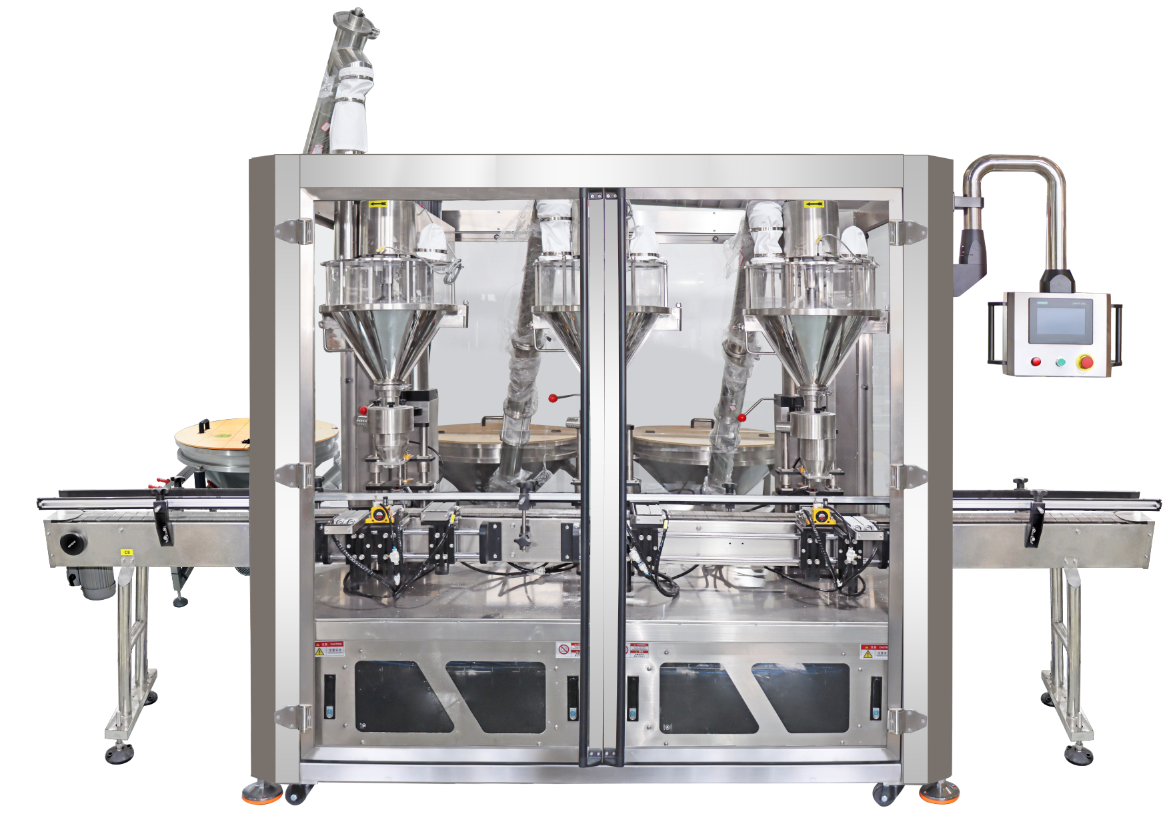
A three-head powder filling machine uses three filling heads to support higher potential production capacity. It is suitable for manufacturers with larger output requirements and can be integrated into a complete packaging line.
Best suited for: Higher-volume production where the required filling weight, material properties, and container dimensions are compatible with a three-head configuration.
3. Powder Filling Machine Comparison: Capacity, Power, and Weight
The following table compares the five machine types using the reference specifications provided for this equipment series.
| Parameter | Semi-Automatic | Single-Head | Dual-Head | Dual-Head with Weighing | Three-Head |
|---|---|---|---|---|---|
| Filling head | 1 | 1 | 2 | 2 | 3 |
| Reference capacity | Depends on operator | 15–30 cans/min | 15–35 cans/min | 30–40 cans/min | 30–55 cans/min |
| Power | 2KW | 3KW | 3KW | 5KW | 6KW |
| Weight | 130 kg | 300 kg | 800 kg | 850 kg | 800 kg |
4. How to Choose the Correct Auger Screw Diameter
The auger screw is a key component of a powder filling machine. Its diameter influences the volume of powder delivered during each rotation, but the actual filling quantity also depends on bulk density, flowability, screw design, and operating parameters.
The following are reference filling ranges for the available screw sizes.
| Auger screw diameter | Reference filling range |
|---|---|
| 25 mm | 3–30 g |
| 38 mm | 30–300 g |
| 57 mm | 300–1,000 g |
| 76 mm | 1,000–5,000 g |
For example, a manufacturer filling 100 g of coffee powder may consider a screw configuration within the 30–300 g reference range. However, the final selection should be verified through testing because different powders occupy different volumes at the same weight.
For fine powders or materials with poor flowability, the hopper design, feeding mechanism, and dosing parameters may also need adjustment.
5. Features That Matter in Daily Production
Beyond filling speed and the number of heads, buyers should evaluate the machine's construction and operating functions.
Servo-controlled dosing: Supports controlled auger movement and repeatable filling.
PLC touchscreen control: Makes operating parameters easier to adjust.
Recipe storage: Helps retain settings for different products; the specified configuration can store up to eight recipes.
Stainless steel construction: Supports hygiene and cleaning requirements when the selected materials and design are appropriate.
Easy-clean hopper: A removable or conveniently opened hopper simplifies maintenance and product changeover.
Dust collection: Helps control airborne powder and maintain a cleaner working environment.
Container detection: A no-container-no-fill function helps prevent unnecessary dispensing.
Packaging line integration: Compatible systems can connect with container feeding, capping, sealing, and labeling equipment.
6. Integrating a Powder Filling Machine into an Automatic Packaging Line
For manufacturers planning to increase production efficiency, a powder filling machine can operate as part of a complete automatic packaging line rather than as an independent unit.
Depending on the container and closing method, a typical powder packaging line may include container feeding, powder filling, capping or can sealing, and labeling. Each machine performs a specific task, and the equipment needs to be coordinated to maintain a stable production flow.
Typical Powder Packaging Line Configuration
Container Feeding → Powder Filling → Capping or Can Sealing → Labeling
Container feeding: A bottle or container unscrambler arranges containers and transfers them to the filling station. For other packaging formats, a suitable feeding system can be selected.
Powder filling: The selected semi-automatic or automatic powder filling machine dispenses the required quantity into each container.
Capping or can sealing: Bottles and jars may use a compatible capping machine, while cans can be matched with a suitable can sealing machine according to the lid and container design.
Labeling: A labeling machine applies product labels after the container has been closed, depending on the line layout and production requirements.
What Should You Consider When Planning a Packaging Line?
1. Match the speed of each machine. The filling machine, container feeding system, closing equipment, and labeling machine should be selected to work together. Differences in operating speed can create container accumulation or reduce the overall line output.
2. Choose equipment according to the container. Bottle diameter, jar height, can dimensions, opening size, and closure type all affect equipment selection. The filling and closing machines must be compatible with the intended packaging format.
3. Consider cleaning and product changeover. If the line handles several powder products, convenient access to material-contact parts and appropriate cleaning procedures can help reduce changeover time.
4. Plan for future production needs. A manufacturer expecting increased demand may prefer an automatic multi-head filling system and a packaging line that can accommodate higher output.
7. Frequently Asked Questions
Is a weighing powder filling machine more accurate than a standard auger filler?
A weighing-type machine measures the dispensed material's weight, providing feedback that a conventional preset auger system may not have. This can improve control over the final dose, but actual accuracy depends on the weighing system, material properties, machine setup, and filling conditions.
How many filling heads do I need?
Choose the number of heads according to your required production output and target filling weight. A single-head machine may be sufficient for moderate output, while double-head and three-head machines can offer greater potential capacity. Actual speeds should be verified through production testing.
Can one machine fill different powder products?
Yes, provided the powders are compatible with the machine. Changing products may require different auger components, dosing parameters, and cleaning procedures.
Can the powder filling machine connect to a complete packaging line?
Yes. Depending on the configuration, it can work with container unscramblers, conveyors, capping machines, can sealing machines, and labeling equipment.
Find the Right Powder Filling Machine for Your Production Goals
The best powder filling machine is not necessarily the one with the most filling heads or the highest rated speed. It is the one that matches your powder characteristics, target filling weight, accuracy requirements, and production goals.
Whether you need a semi-automatic powder filler for small batches, an automatic multi-head system for higher output, or a weighing-type machine for better net-weight control, choosing the right configuration can help improve filling consistency and streamline your packaging process.
At Guangzhou Full Harvest Industries Co.,Ltd, we provide powder filling solutions for different materials, container formats, and production requirements. From individual filling machines to integrated packaging lines with container feeding, capping, can sealing, and labeling equipment, we can help you evaluate a suitable configuration for your application.
Looking for the right powder filling machine for your product? Tell us the type of powder you need to fill, your target filling weight, container size, and expected production capacity. Our team can help you select a suitable machine and develop a packaging solution tailored to your production needs.