
From "sealing" to "locking in freshness": A leap in the value of a single process
The limitation of traditional can sealing methods is that while the lid is sealed, air remains inside. Residual oxygen continuously reacts with the product contents, leading to a slow decline in quality over time.
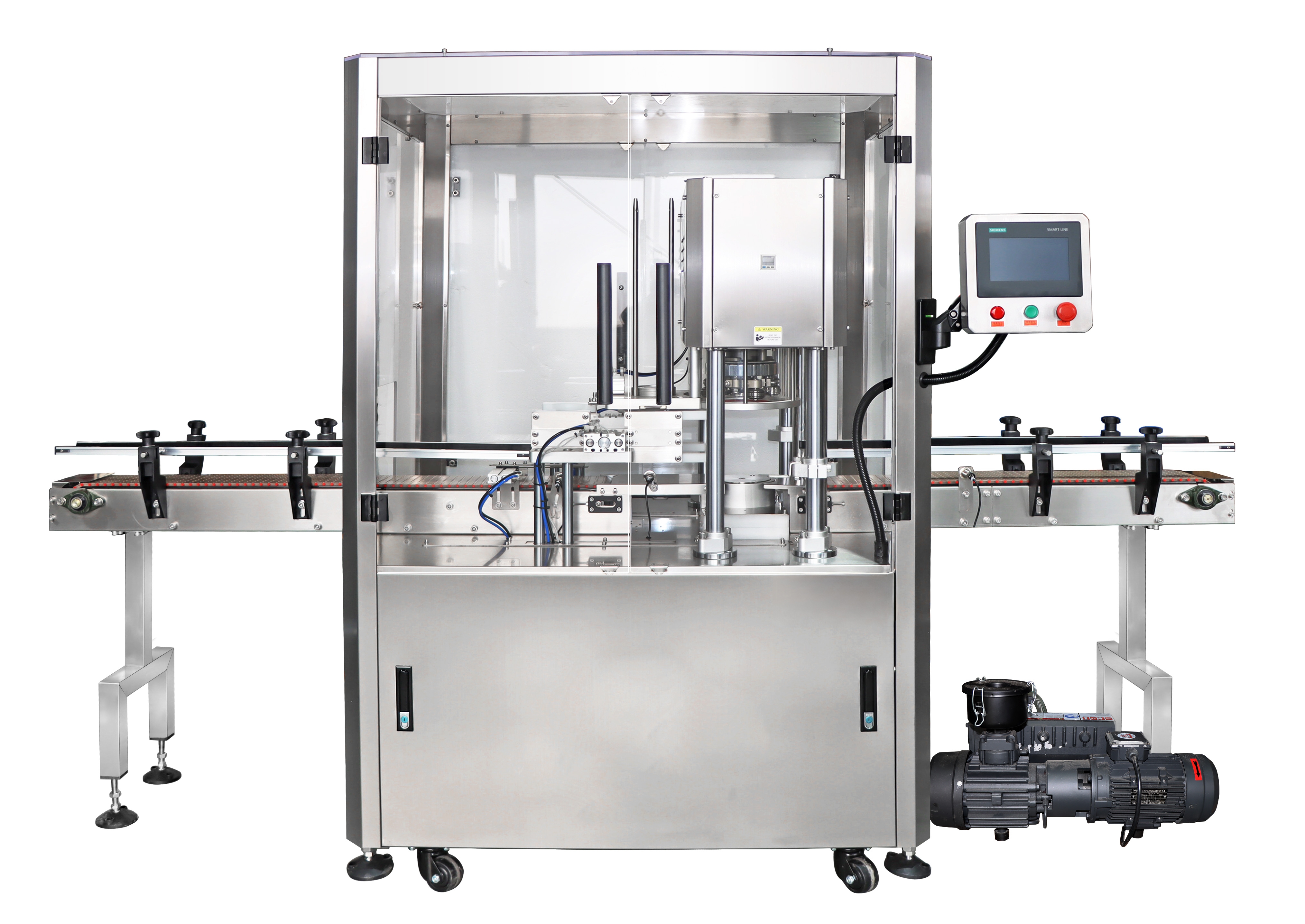
GZFharvest fully automatic vacuum-sealing and nitrogen-filling can sealing machine first creates a vacuum, then fills with nitrogen, and finally seals the can. The core logic of this process is simple: replace the air with nitrogen, sealing the product in a near-oxygen-free environment.
Oxygen is expelled, eliminating the conditions for oxidation reactions. The product's color is preserved longer, its aroma dissipates more slowly, and the decay period of its nutrients is extended. For products highly sensitive to oxygen, such as milk powder, protein powder, and coffee powder, this difference directly impacts shelf life and quality performance.
Why did make this process "fully automatic"? Vacuuming, nitrogen filling, and sealing—if these three actions were performed separately, not only would they be inefficient, but each additional transfer and exposure would increase the risk of oxygen backflow.
GZFharvest fully automatic vacuum nitrogen-filling can-sealing machine completes all three sets of actions in the same station and within the same sealed chamber. Once the can enters the station, it is no longer exposed to outside air until sealing is complete. A PLC control system manages the entire process, parameters are set via a touchscreen, and the equipment operates automatically.
The significance of "fully automatic" here is not just about saving labor, but also ensuring that every can is processed according to the same standards—independent of the operator's condition and unaffected by shift changes.
One process affects three things:
Shelf life:The low-oxygen environment significantly inhibits bacterial growth and oil oxidation, effectively extending the product's shelf life. For export products, this extended shelf life often translates to a wider market reach.
Quality consistency:The automated process ensures that the residual oxygen level and sealing quality of each can are within a controllable range. Batch-to-batch variations are minimized, resulting in stable and predictable product quality.
Brand reputation:The color, aroma, and taste that consumers experience when opening a can determine their willingness to repurchase. The quality investment in the sealing process will ultimately be reflected in user reviews.